
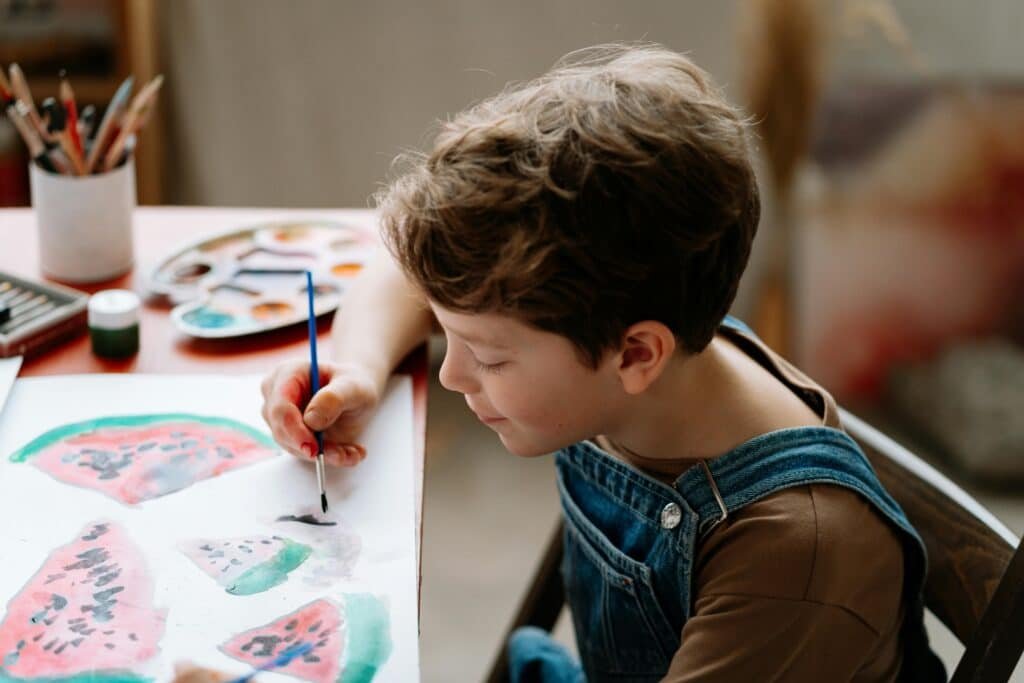
Children find painting magical. Their faces alight when the paint activates with water; when they mix a new color from an unexpected combination; when the paint glides from their brush across the page. Watercolor is an excellent media to use with young children because of its whimsical, effortless look. Leaving parts of the paper unpainted is something most children do with any painting, and with watercolor, the effect looks purposeful and playful. Here is a guide to get started watercolor painting with your little one:
Why Watercolor
- Watercolor paint is washable. Painting with young children is rarely a mess-free activity, but watercolor paint easily washes off hands (and faces), clothing, and tables.
- Watercolor paint is dries quickly and is simple to use.
- Watercolor paint is expressive. The amount of water used will create varied flowing, mixed, and layered effects.
What You Will Need
1. Watercolor paper
When painting with children, watercolor paper is the most important supply you can invest in. Although “printer paper” is easily-accessible in most households, painting on light-weight paper can be disappointing and frustrating. The paper easily ripples and rips since it is not designed to hold any water. Even if the paper doesn’t end up punctured, the finished picture will be wrinkled is likely not something you will be excited to display in your home.
Unfortunately, some paper labeled watercolor paper can still “pill” and disintegrate with too much water and/or friction from brushstrokes. Look for cold pressed 140 lb watercolor or mixed media paper. Canson is an affordable brand, sold at craft stores, and even superstores such as Walmart will have suitable and affordable options.
2. Paint
Almost any watercolor paint set works well, and it is not necessary to buy watercolor paint in tubes. Prang is a favorite and affordable brand and buying “pan” sets avoids unnecessary mess from partially-hydrated paint in tubes. One advantage of dried paint over tubes is that children must hydrate the colors with water and are less likely to try to use too much paint, which creates and caked and dull effect.
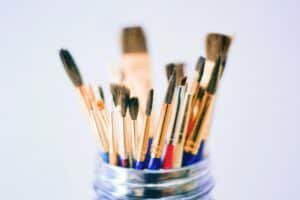
3. Brushes
Almost any soft-haired natural or synthetic brush will work well for watercolor. Avoid hog-bristle brushes (typically used for oil painting). A variety of sizes is preferable, including large brushes that can hold lots of water and are good for painting soft-toned backgrounds.
4. A cup of water
For activating paint and cleaning brushes (change water often, especially when switching from dark to light colors).
5. Paper towels or an old cloth
For blotting brushes, color testing, and fixing mistakes.
6. Low-adhesion painter’s tape (optional)
Taping the paper to the painting surface (your table or counter) will both prevent the paper from bowing (even high-quality paper may bow upwards while painting from the water) and create an even border for a beautiful, finished look. While regular painter’s tape will work, sometimes the tape adheres too strongly to the paper and will tear the topmost surface of the paper when removed. Low-adhesion or delicate-surface painter’s tape is best.
Paint!
Wet-on-wet painting
Have your child wet the paper with clean water and then add color. The color will bloom and spread across the paper in magical ways.
Mood or music painting
Have your child paint how they are feeling using colors and shapes; or play a song and have them try to put the mood or tone of the music into their painting.
Color mixing exploration
Have your child use just red, blue, and yellow in their painting to discover how other colors are made. (Red+yellow = orange; blue+yellow = green; red+blue = purple; red+yellow+blue = brown)
Praise and Display
- You set the tone for an enjoyable art experience for your child. If you are someone who tends to worry about mess, have them wear something you don’t mind getting “painted.” Put newspaper or a plastic tablecloth down on the table or counter.
- Put on calm music or paint alongside your child to encourage them to be patient and persist in the activity.
- Encourage any positive character traits you see: praise their creativity, exploration, patience, or carefulness.
- Ask open-ended questions about their work. Instead of “what is it?” try saying, “tell me about your painting!”
- Display their work. Whether framed or hung on the refrigerator, proudly showing their work in your home demonstrates you value their effort and will encourage them to excel still more.
At Intrinsic Scholars Academy we know firsthand that watercolor painting is not just an art project, it is a chance to unveil a child’s imagination. We encourage you to try it at home and enjoy the colorful moments you will share together. Schedule a tour of Intrinsic Scholars Academy or contact us to learn more about what we have to offer your child.
Happy painting!